Two PIN kinds
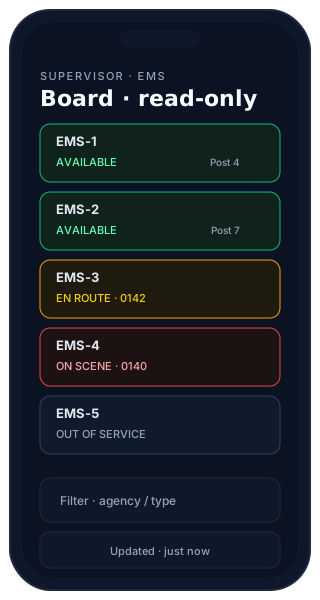
Unit PINs are bound to a single resource (one truck, one badge). Supervisor PINs are scoped, optionally filtered to one agency or one resource type.
Mobile companion · included with ctHelixCAD™
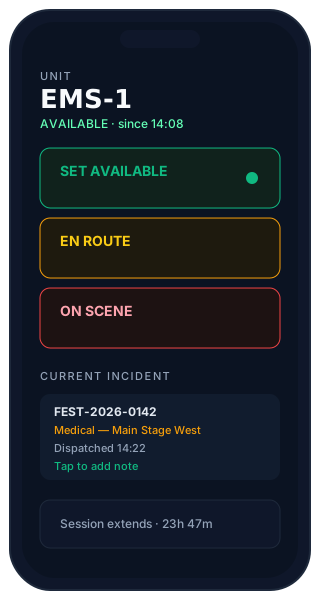
Field units shouldn’t fight a login screen. ctHelixCAD™ includes a built-in mobile surface (/m) that runs in any phone browser — no app store, no installs, no usernames to maintain.
/m is the early surface of ctHelixMobile™ — the broader field-mobile platform in development across the suite.
For units
For supervisors
How the PIN model works
PINs are designed for shift work — short-lived, easy to rotate, and isolated from the dispatcher console’s identity model.
Unit PINs are bound to a single resource (one truck, one badge). Supervisor PINs are scoped, optionally filtered to one agency or one resource type.
Cleartext is shown once at issue or rotate — then never again. Dispatch can rotate any PIN at any time without ending the shift.
PINs are hashed with Argon2 in the database. The cleartext exists only in the moment of issuance.
Mobile sessions live in short-lived tokens — they never share the dispatcher console’s auth surface. A compromised PIN never grants console access.
24-hour base expiry with sliding extension while the unit is active. Idle sessions age out on their own.
When PIN issuance is too slow for the moment, dispatch can send a one-tap login link directly to the unit’s phone. The link is short-lived, tied to the device that opens it first, and ages out under the same sliding-session logic as PIN sessions.
Why no accounts
A roster of 40 officers for a one-day event shouldn’t require 40 emails, 40 password resets, and 40 onboarding flows. PINs match the way real shift work actually runs — issued at briefing, rotated when needed, retired at end of detail.
The dispatcher console keeps a real identity model for staff who need it. The mobile surface stays as light as the work it supports.
We’ll spin up a unit PIN and a supervisor PIN, hand you a phone, and let you drive.