Master Name Index
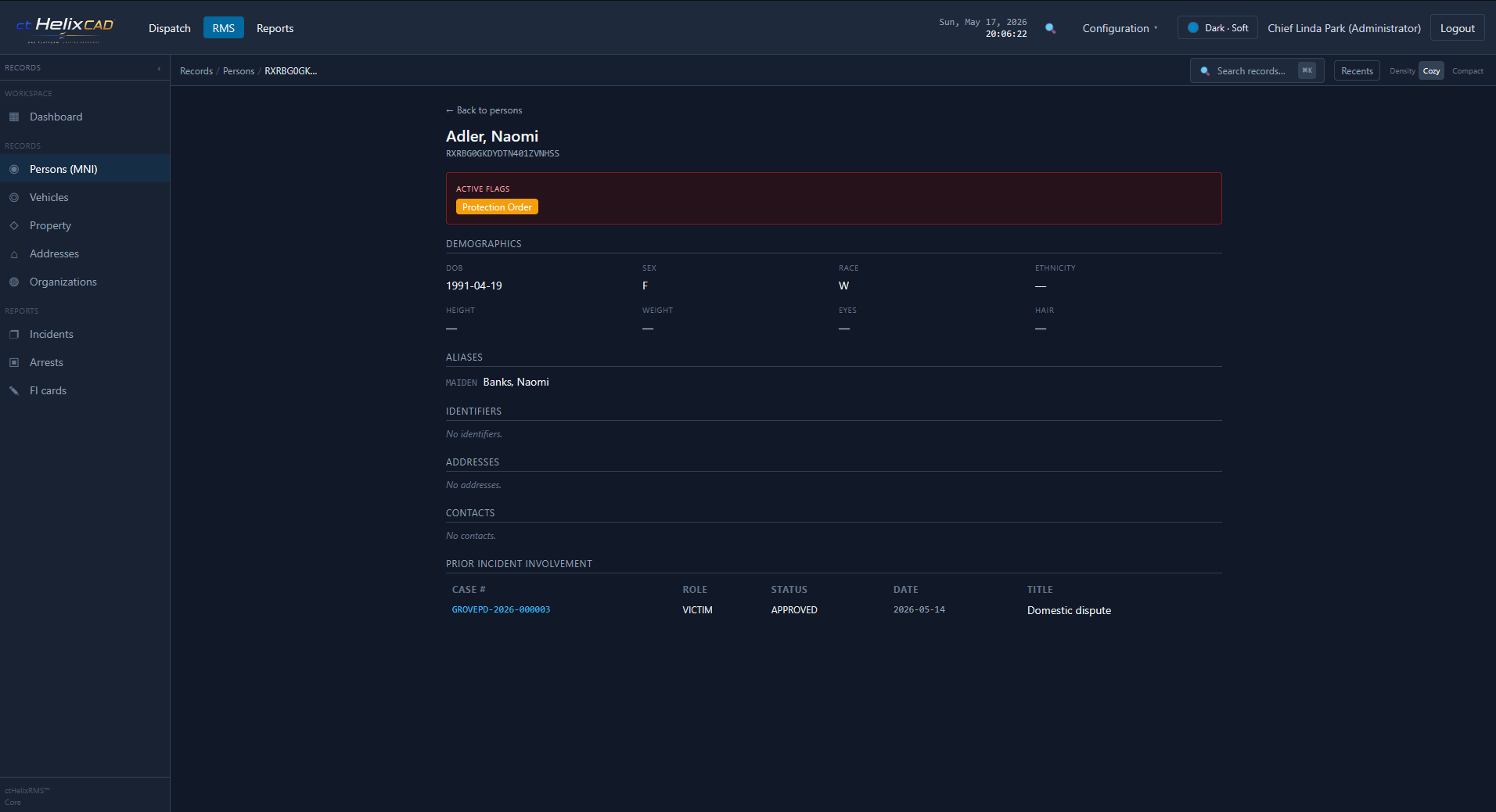
One record per person, vehicle, property, address, and organization — shared across every report, every lookup, every dispatch. When the same name appears across years, it’s the same record, not a fresh duplicate.
ctHelixRMS™ is the records-management module of the ctHelixOne™ suite. It’s built deliberately, with the same operators who guide ctHelixCAD™, so it integrates natively from day one instead of being grafted on later. The depth of each capability scales with the engagement — agencies tell us what matters first.
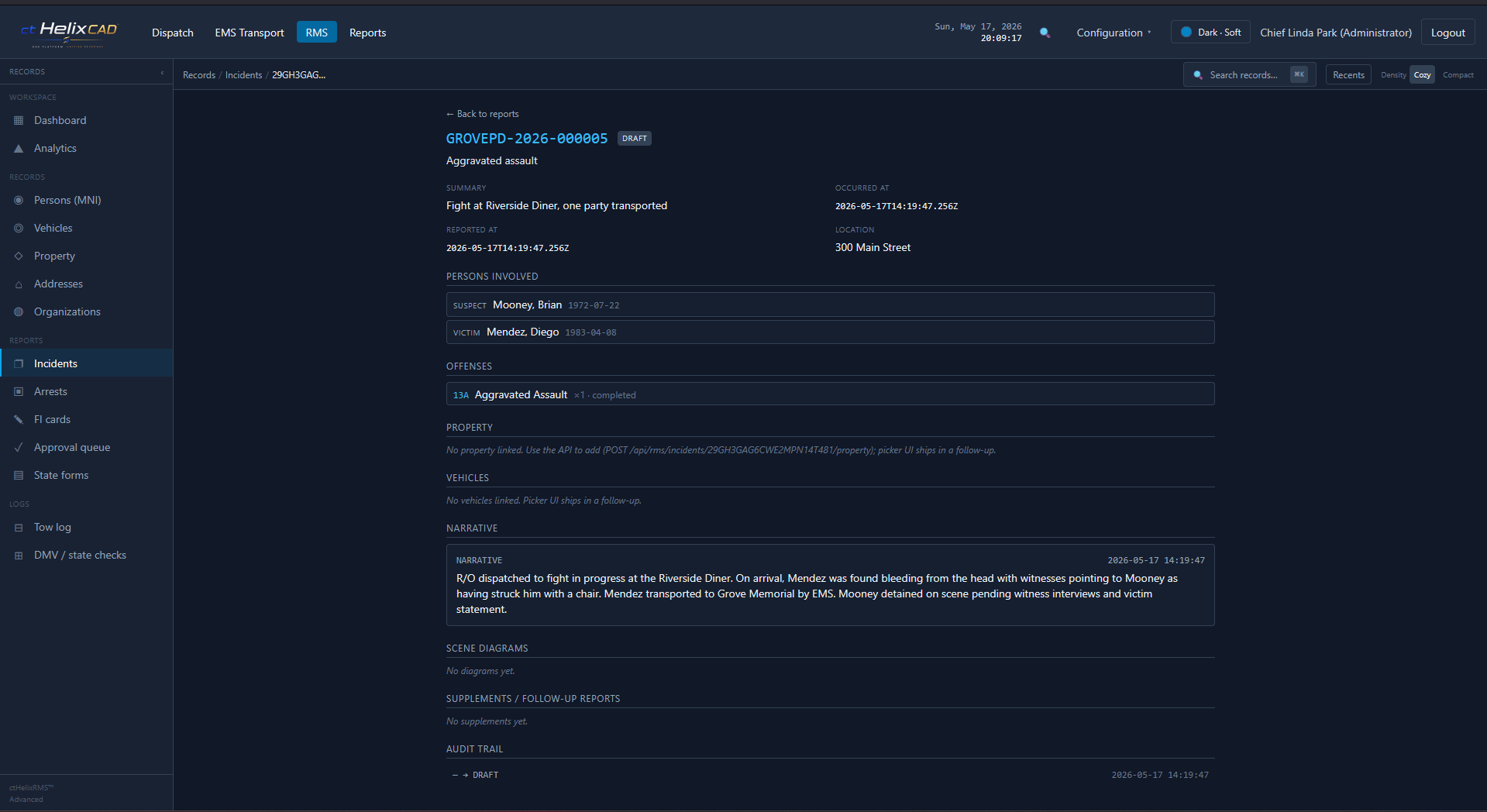
All names, agencies, addresses, and other data shown in screenshots throughout this page are fictional sample data.
One record per person, vehicle, property, address, and organization — shared across every report, every lookup, every dispatch. When the same name appears across years, it’s the same record, not a fresh duplicate.
Primary and secondary offenses, involved persons (suspect, victim, witness, reporting), vehicles, property, and structured narratives. Carries the timestamps, locations, and unit assignments from dispatch forward.
Corrections supersede prior entries with attribution — nothing is overwritten or quietly edited. The full thread is preserved, defensibly, every time.
Numbered supplements link back to the original incident with their own simpler status chain. Investigators add to the record without disturbing the foundation.
Standalone or linked to an incident. Charges, statute citations, and a disposition lifecycle that follows the case from pending through prosecution and outcome — visible on the person’s record from one click.
Lightweight subject-stop records that index into the same name registry — quick to write, defensible later, searchable across years.
Known-risk address flags — officer-safety, prior DV calls, dangerous dog, hazmat, mental-health history, and your agency’s own categories. Surface back in dispatch the moment an incident location is entered.
Items, serials, and ownership tied to persons and incidents. Photos, locations, dispositions, and chain of custody — all on the same audit thread the rest of the record uses.
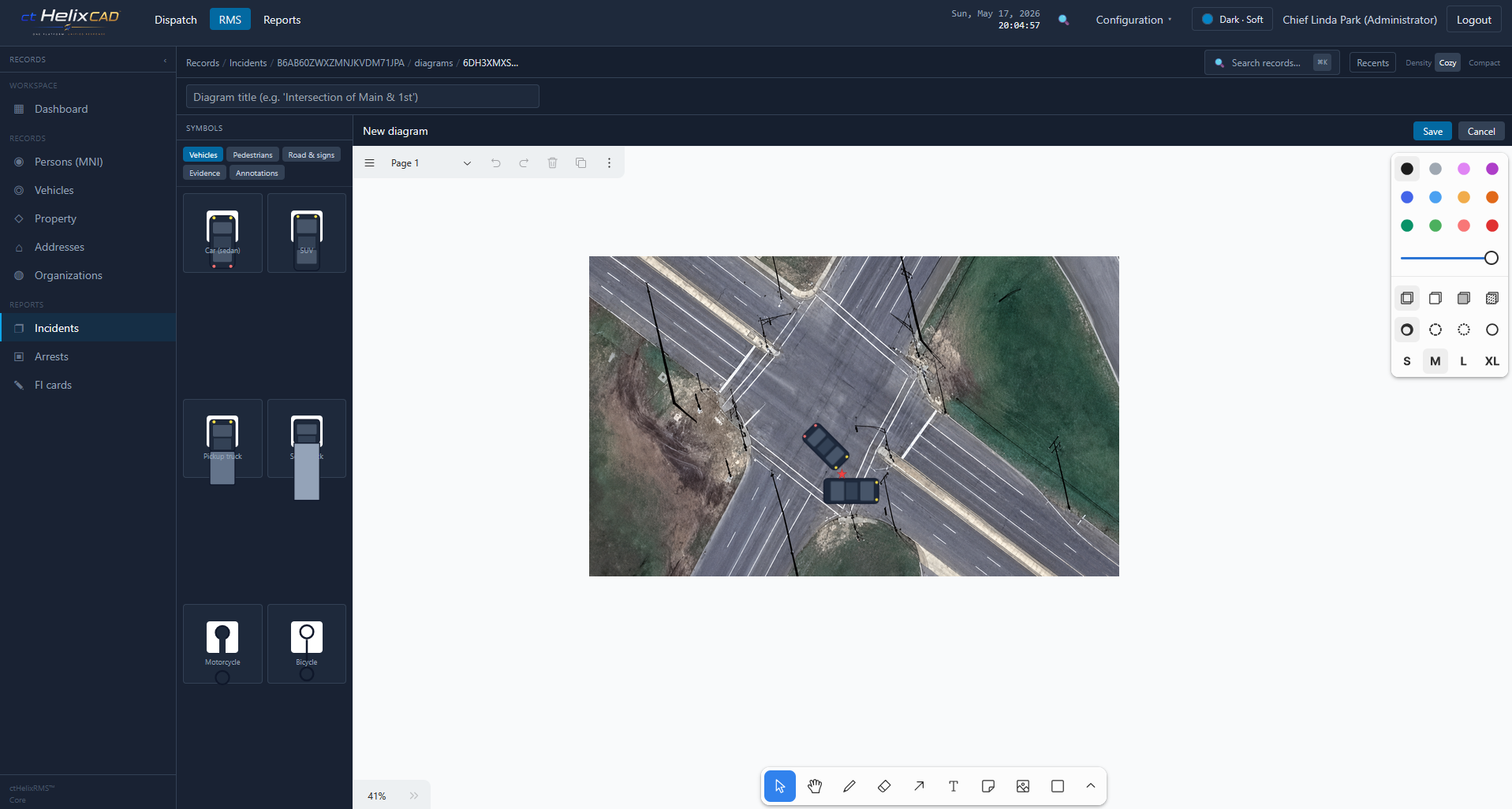
Visual scene documentation with a curated symbol library for vehicles, pedestrians, evidence markers, and annotations. Attach to any incident, supplement, or form.
Per-agency review chains. Supervisor sign-off, kickbacks, and revisions are preserved as versions — kickbacks tell their own story months later.
An agency-configurable form library for the report types your jurisdiction actually requires — built once, versioned forward, rendered as branded PDFs through the same pipeline as the rest of the suite.
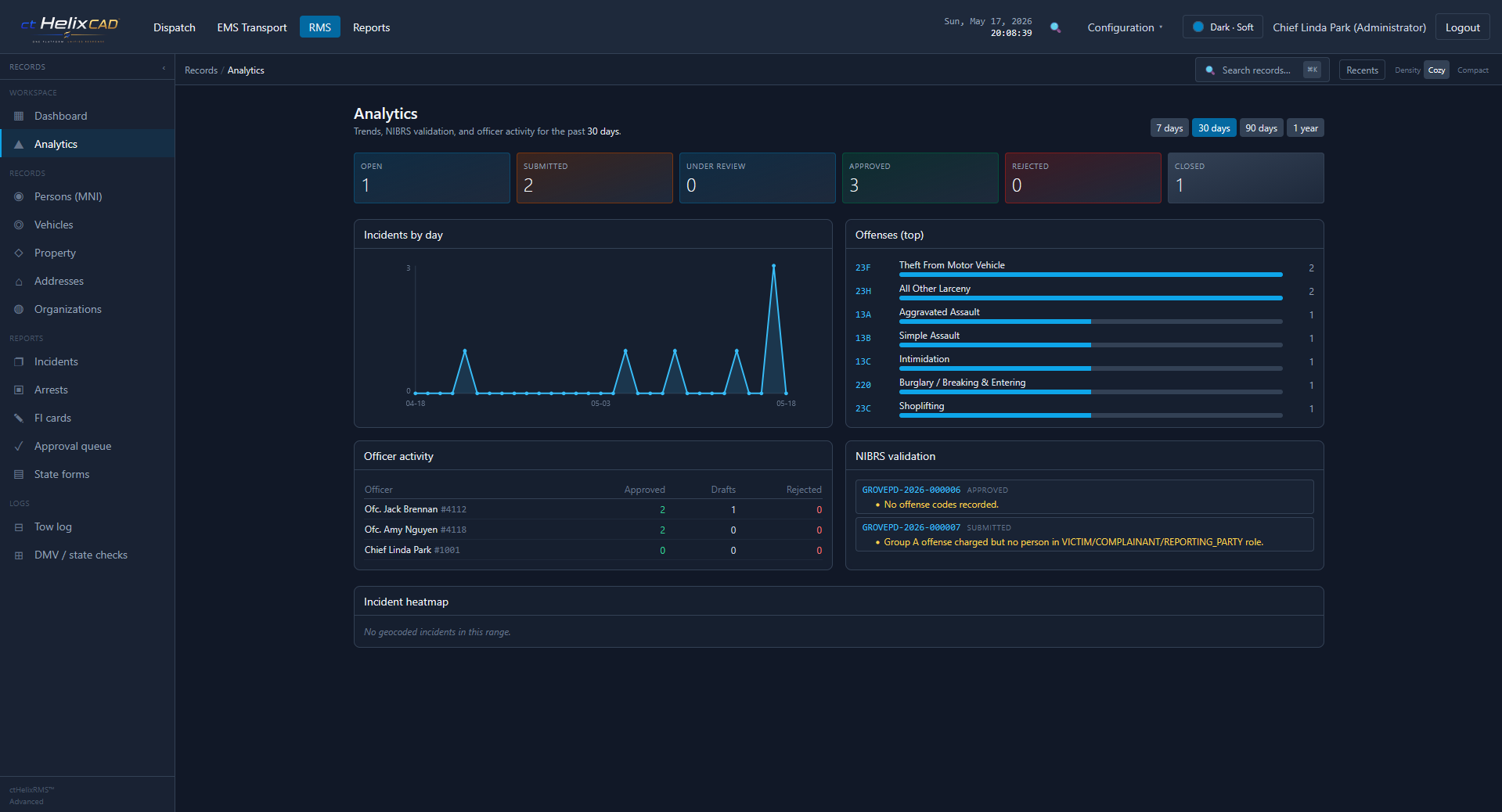
Agency-level dashboards across reports, officer activity, submission readiness, and trends. Designed for command-staff briefings, not data-science teams.
NIBRS-style structured output as the foundation. Specific state submission paths are scoped per engagement so the format actually matches what your state accepts.
Close a call in dispatch, start a report with the timestamps, names, units, and audit thread already in place. Pull name, vehicle, and address history into dispatch without leaving the board.
Inside the screens
Dispatch is half the record
Most agencies run dispatch and records as two systems that don’t speak. ctHelixOne™ treats the incident your dispatcher created as the foundation of the record — names, locations, units, timeline, all carried forward without a single keystroke of re-entry.
From the other direction, the dispatch console can pull name, vehicle, and address history from RMS the moment it’s relevant — premise warnings on incident lookup, prior contacts in the beat history view, and a quick lookup any dispatcher can fire from the keyboard.
Dispatcher clears the incident with the same clicks they’d use otherwise.
One button on the closed incident opens a pre-filled report in ctHelixRMS™ — location, primary unit, timestamps, involved names already populated.
The writing officer fills in narrative and details. The structural data they’d normally re-type is already there.
Approval workflow routes to the reviewer. Kickbacks and revisions preserve the full version history.
Built for both directions
ctHelixOne™ is positioned for smaller agencies and operations that want one defensible operations spine — dispatch, records, and EMS transport — without seven-figure enterprise contracts. ctHelixRMS™ is the records half of that story.
Event and portable deployments can stay CAD-only. RMS comes in when the agency owns the records cycle — incident reports, supplements, arrests, FI cards, the master name index, and the audit thread that ties them together.
Early agencies get a direct line to the build team. Tell us what your records reality looks like — we’re listening.